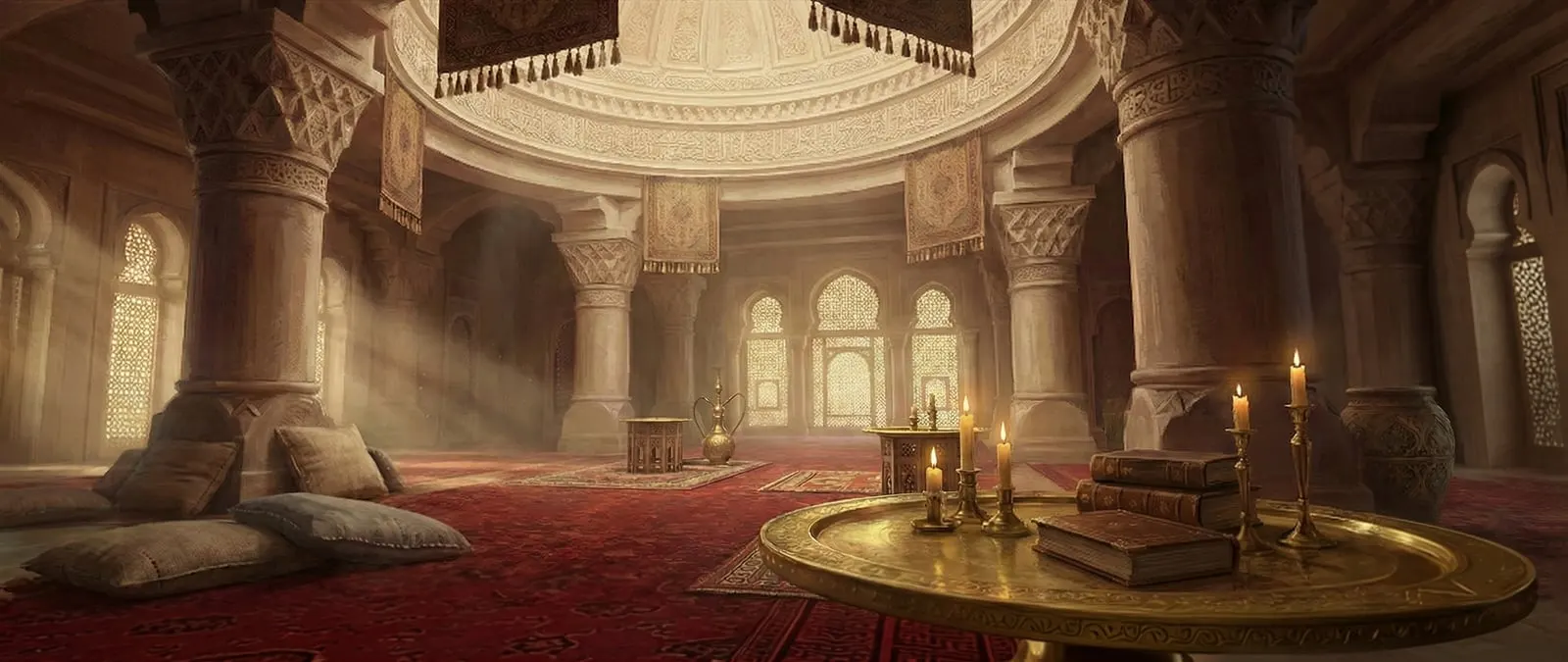
Geography and Climate
This is where human civilization truly began. Its frame is written in three landscapes: the alluvial plains between two rivers, the green ribbon of the Nile valley, and the harbored coast of the southern Mediterranean reaching toward the open sea. The Tigris and Euphrates cradled the city-states of Sumer in the east; the Nile fed the pharaohs of Egypt in the west; and farther still, the sails of Carthage carried this civilization's reach clear across the Mediterranean. This was never one country — it was a vast cradle spanning two continents, Asia and Africa.
These heroes' homelands fall, by true historical origin, into one region: the Middle East and Africa. It holds the Middle Eastern heartland of Mesopotamia, Persia, and the Levant — and it explicitly embraces Africa: Egypt along the Nile, and Carthage on the North African coast. Desert cut kingdoms into scattered oasis city-states; the river valleys locked agriculture and power onto a single waterline; and the coast sent trade and conquest off toward a horizon no eye could follow. The great cities here inherited an ancient-Babylonian grandeur — concentric rings laid out along strict central axes, their skylines defined by monumental temples and sprawling waterworks.
From Sumerian Tablets to Carthaginian Sails
This ground holds more than one of humanity's beginnings, across more than three thousand years.
- Sumer and the two rivers. Humanity's oldest city walls rose here. Gilgamesh, king of Uruk, is the hero of the world's oldest surviving epic; his quest for immortality, ending in dust, is civilization's first long look at its own limits. The standardization of city-state defense, the earliest frameworks of civic right and duty — all were written here, on clay.
- Ancient Israel. The young shepherd King David felled the giant Goliath with a sling, then united the tribes of Israel and founded his capital at Jerusalem. Among the hills of the Levant, a herdsman became a nation's king.
- Ancient Egypt (Africa). Thutmose III, the Eighteenth Dynasty pharaoh, fielded the composite bow for the first time at the Battle of Megiddo, led seventeen campaigns into Canaan, and is remembered as "the Napoleon of the ancient world." A thousand years later, Cleopatra, last queen of the Ptolemaic line, held her dynasty together by cunning and control, and made Alexandria the most celebrated seat of learning in the ancient world.
- Persia. Cyrus the Great forged the Achaemenid Empire across three continents and, after taking Babylon, issued the Cyrus Cylinder — a charter of tolerance that made his rule famous. Yet on the empire's northern frontier, the steppe queen Tomyris led the Massagetae to defeat and slay Cyrus himself. The conqueror's legend ended in a queen's hand.
- Carthage (Africa). The legendary founder-queen Dido sailed west from the Levant to raise Carthage on the North African coast; centuries later, her people produced the general Hannibal Barca, who crossed the Alps to strike Rome and carried this civilization's edge to its rival's doorstep.
- The medieval Islamic era. Saladin, the Ayyubid sultan, annihilated the Crusader host at Hattin, retook Jerusalem, and passed into legend for his mercy.
These ages stand thousands of years and two continents apart, yet within one region's story they share the same ground of desert, valley, and coast.
Faith, Wisdom, the Open Sea, and the Bow
Faith — temples, priests, and law codes. From Sumer's god-kings to the deified pharaohs of Egypt, from the Temple in David's Jerusalem to holy war and mercy in the Islamic world, faith is this land's deepest foundation.
Wisdom — the Library of Alexandria, Persia's satrapy system, the Arab world's preservation and translation of classical learning. This land has never lacked scholars, nor rulers who treated knowledge as an instrument of state.
River and open sea — kingdoms are born beside water, expand across the sand, and set sail along the coast. Trade routes, caravans, and oasis city-states form the inland spine, while the galleys of Carthage carried it all to the far shore of the Mediterranean. This is the one region that wrote both river-valley farming and deep-sea trade into its very blood.
Bow and stratagem — the composite bow rewrote warfare, and from Thutmose III to David's sling, the power of range was rewritten again and again here; while tolerance, diplomacy, written law, and a queen's craft proved another kind of conquest, one that spills no blood.
Nine Names on the Map
Of the thirty legendary commanders summoned to this continent, nine hail from the Middle East and Africa, spread across Infantry, Archers, and Cavalry:
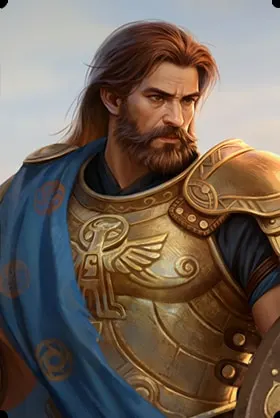
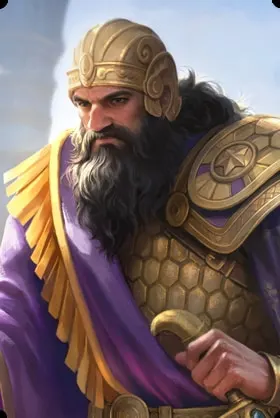
- Gilgamesh (Sumer, Infantry) — king of Uruk, hero of the world's oldest epic.
- Cyrus the Great (Persia, Infantry) — founder of the Achaemenid Empire, whose Cyrus Cylinder set the precedent for tolerant rule.
- King David (Israel, Archer) — the shepherd-king who felled Goliath, united the tribes, and founded Jerusalem.
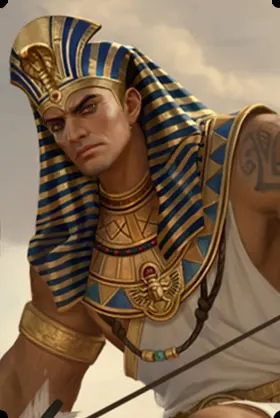
- Thutmose III (Egypt, Archer) — Eighteenth Dynasty pharaoh, who proved the composite bow at Megiddo; "the Napoleon of the ancient world."
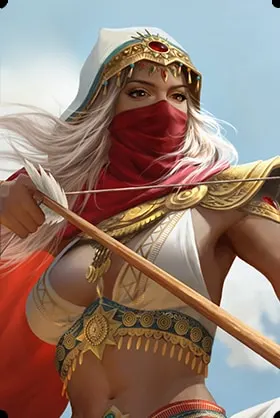
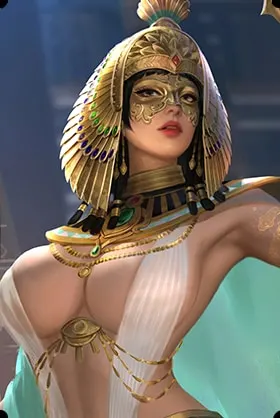
- Cleopatra (Egypt, Archer) — last queen of Ptolemaic Egypt, who held command by cunning and control, and made Alexandria a seat of learning.
- Tomyris (Massagetae, Archer) — the steppe queen who defeated and slew Cyrus the Great.
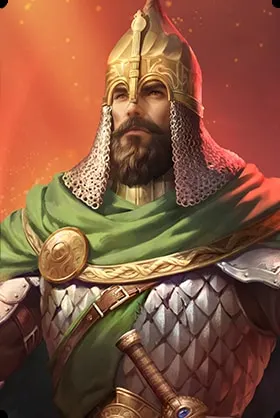
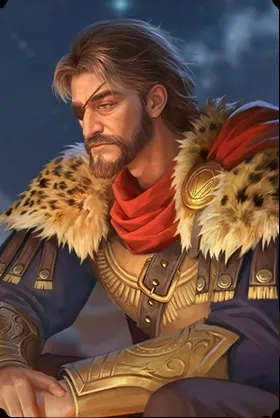
- Saladin (Ayyubid dynasty, Cavalry) — sultan, victor at Hattin and restorer of Jerusalem, famed for mercy.
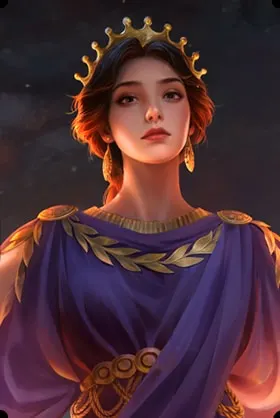
- Dido (Carthage, Archer) — the legendary founder-queen who sailed west to raise Carthage in North Africa.
- Hannibal Barca (Carthage, Cavalry) — the Carthaginian general who crossed the Alps to strike Rome.
These nine share one trait: they were never conquerors alone, but shapers of institutions, faith, knowledge, and trade. From the first hero on the clay tablets of two rivers, to the general who set sail from the African coast on his great campaign, their glory once spanned Asia and Africa alike. Now the Old Empires have fallen, and the ore veins beneath the desert, the ruined city-states along the valleys, and the silent harbors of the coast wait for new Lords to bind them together again.